
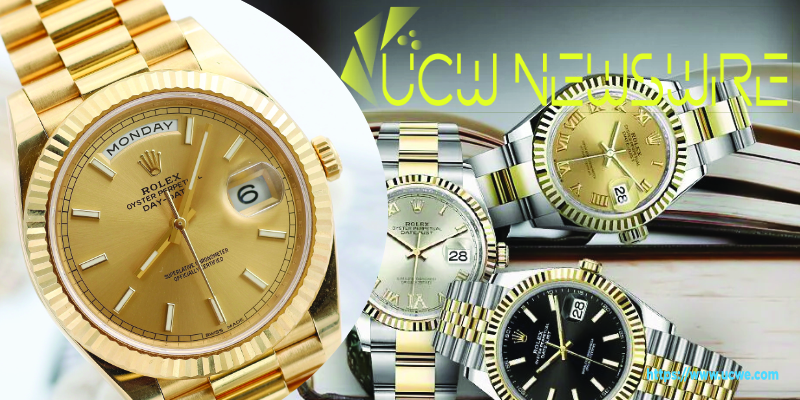
Few brands in the world command the authority, recognition, and enduring trust of Rolex. Founded in 1905 by Hans Wilsdorf, Rolex did not merely build watches, it built a global benchmark for precision, durability, and status. From creating the world’s first waterproof wristwatch, the Oyster, to pioneering self-winding movements with the Perpetual rotor, Rolex has consistently aligned engineering excellence with uncompromising brand discipline. Today, the crown logo is synonymous not just with luxury, but with reliability, an attribute that has allowed Rolex to transcend fashion cycles and economic downturns for more than a century.
That emphasis on trust and permanence is precisely why blockchain technology, when applied correctly, represents a meaningful opportunity rather than a brand risk. Integration with a purpose-built, enterprise-grade blockchain such as Pecu Novus could act as a powerful value add across authentication, provenance, and lifecycle tracking. In an era where counterfeit luxury goods represent a multi-billion-dollar global problem, blockchain-backed verification provides immutable proof of origin, ownership history, and service records. For Rolex, whose secondary market is both vast and influential, anchoring each timepiece to a tamper-proof digital record could strengthen consumer confidence, enhance resale integrity and protect the brand’s long-term equity without altering its core identity.
Beyond authentication, a blockchain framework could also support operational efficiencies and customer engagement without pushing Rolex into speculative or consumer-facing crypto narratives. Warranty validation, service history tracking, insured ownership transfers and institutional inventory management could all benefit from a secure, permissioned blockchain environment. Pecu Novus, designed specifically for financial and enterprise use cases, aligns with the values Rolex has always upheld: control, precision, durability, and discretion. Importantly, such an integration would not change what Rolex is, it would reinforce why Rolex endures.
As luxury brands navigate a digital future, Rolex stands apart because it has never chased trends. Instead, it adopts innovation only when it strengthens the foundation. Blockchain, used as infrastructure rather than marketing, fits that mold. If adopted thoughtfully, it would represent continuity, not disruption—another quiet evolution in a brand defined by longevity.
Interesting Rolex Facts
- Rolex produces an estimated 800,000 to 1 million watches per year, yet demand consistently exceeds supply.
- The company is privately owned by the Hans Wilsdorf Foundation, a charitable trust based in Switzerland.
- Rolex watches have reached the deepest point on Earth (Mariana Trench) and the summit of Mount Everest.
- Despite its scale, Rolex rarely advertises individual products—its brand equity does most of the work.
- Vintage and rare Rolex models routinely outperform traditional asset classes at auction, underscoring their status as both functional instruments and stores of value.
In a world increasingly focused on verification, permanence, and trust, Rolex’s past and blockchain’s promise may be more aligned than they first appear.