
Mining in the Age of Innovation, Why Technology, Not Just Commodity Prices, Is Redefining the Sector
For much of modern financial history, mining has been viewed as a cyclical, capital-intensive industry whose fortunes rise and fall with commodity prices. Gold rallies during periods of fear, copper

For much of modern financial history, mining has been viewed as a cyclical, capital-intensive industry whose fortunes rise and fall with commodity prices. Gold rallies during periods of fear, copper surges during economic expansions and silver and platinum oscillate between industrial and monetary narratives. Yet beneath the familiar boom-and-bust cycle, something more structural is taking place. Advances in mining, refining and processing technology are fundamentally reshaping the industry’s cost curves, environmental footprint and long-term value proposition, potentially altering how investors should think about metals in the years ahead.
This is not simply a story about higher prices. It is a story about productivity, efficiency and structural demand in a world that is materially different from even a decade ago.
Technology at the Mine Site: From Muscle to Intelligence
Mining has historically relied on brute force, large equipment, massive energy inputs and human-intensive operations. Today, that model is being steadily replaced by data-driven, automated systems.
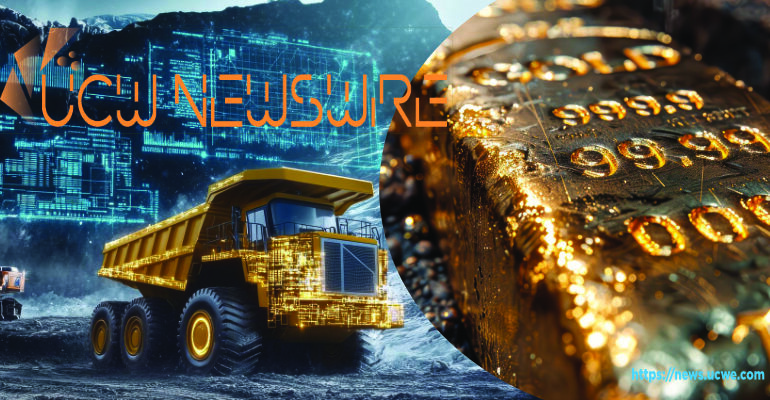
Autonomous haul trucks, AI-guided drilling and sensor-based ore body modeling are now reducing waste and improving recovery rates. Real-time geological analytics allow operators to extract higher-grade material while minimizing unnecessary excavation. The result is not just lower operating costs, but longer mine lives and improved capital efficiency.
Electrification is also reshaping mine operations. Battery-electric vehicles and trolley-assist systems are lowering diesel consumption, reducing maintenance costs and cutting emissions. Over time, these systems offer more predictable operating expenses and reduced exposure to fuel price volatility, an increasingly attractive feature for long-term investors.
The Quiet Revolution in Refining and Processing
If mining innovation is about efficiency, refining innovation is about precision and sustainability.
New hydrometallurgical techniques, advanced leaching processes and closed-loop water systems are enabling higher metal recoveries with significantly lower environmental impact. In copper and precious metals, technologies such as bioleaching and selective separation are reducing energy consumption while improving throughput.
Refining is also becoming more modular and localized. Smaller, technology-driven processing facilities can now be deployed closer to mine sites, reducing transportation costs and geopolitical risk. This shift is especially important as governments and end users increasingly demand traceability, lower carbon intensity and secure supply chains.
For companies that successfully integrate these innovations, refining is no longer just a cost center, it becomes a competitive advantage.
Cost Effectiveness and Energy Efficiency
While advanced mining technology often requires higher upfront capital investment, the long-term economics are increasingly compelling. Lower labor intensity, reduced energy usage and improved asset utilization translate into more stable margins across commodity cycles.
Energy efficiency, in particular, is becoming a defining variable. Mines that integrate renewable power, energy storage and smart-grid technology can lock in predictable costs while reducing regulatory and reputational risk. Over time, these operations are better positioned to withstand both commodity downturns and tightening environmental standards.
In an industry where margins have historically been hostage to external variables, technological control is a meaningful shift.
What Investors Should Be Watching
As prices for gold, silver, copper, platinum and other metals continue to rise, investors should look beyond headline commodity prices and focus on structural positioning. Key indicators include:
- Technology adoption: Companies investing in automation, AI and advanced processing tend to have lower all-in sustaining costs and better scalability.
- Energy strategy: Operations with electrification and renewable integration are less exposed to fuel volatility and carbon pricing.
- Resource quality and recovery rates: Higher recovery efficiency often matters more than raw resource size.
- Jurisdictional stability and supply-chain security: Access to processing and refining capacity is becoming as critical as access to the ore itself.
In this environment, the winners are likely to be operators that treat mining as a technology-enabled manufacturing process rather than a purely extractive one.
Is “What Goes Up Must Come Down” Still True?
Historically, metals markets have been cyclical. Price spikes invited overinvestment, which eventually led to oversupply and collapse. The question investors are now asking is whether today’s environment is fundamentally different.
There are compelling reasons to believe it is. Copper demand is being structurally supported by electrification, renewable energy and grid expansion. Precious metals are increasingly influenced by sovereign debt levels, monetary policy and geopolitical fragmentation rather than short-term inflation cycles alone. Platinum and related metals are tied to both industrial use and evolving energy technologies.
At the same time, years of underinvestment, declining ore grades and more stringent permitting requirements have constrained new supply. Unlike past cycles, production cannot be ramped up quickly or cheaply.
This combination, structural demand, constrained supply and technology-driven cost discipline, suggests that while prices may fluctuate, the floor beneath many metals may be higher and more stable than in prior decades.
The modern mining industry is no longer defined solely by what it pulls out of the ground, but by how intelligently it does so. Technology is transforming mining from a reactive, price-driven business into a more resilient, process-optimized industry.
For investors, this means the next generation of mining leaders may not simply be the largest producers, but the most innovative ones. In a world hungry for metals and increasingly intolerant of inefficiency, innovation, not just scarcity, may be the true driver of long-term value.
