
How Social Media Noise Shapes and Distorts Modern Reality
Social media platforms such as X, TikTok, and Instagram were built to connect people, share information and democratize communication. In less than two decades, they have succeeded beyond expectation. They
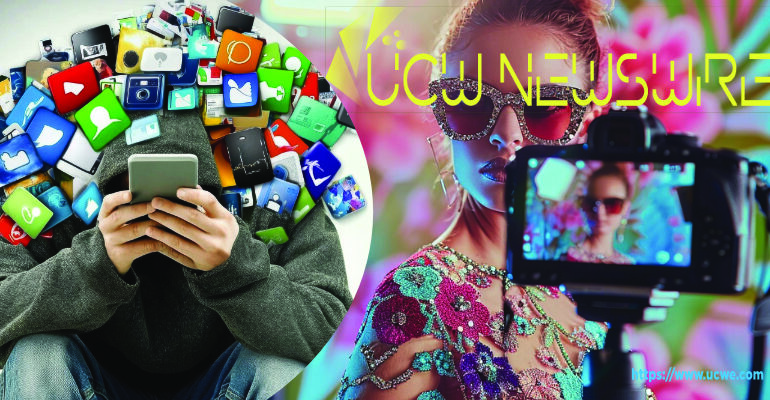

Social media platforms such as X, TikTok, and Instagram were built to connect people, share information and democratize communication. In less than two decades, they have succeeded beyond expectation. They have also created an environment where volume can masquerade as truth, repetition can replace verification and narratives can be manufactured at scale.
Today’s digital public square is no longer defined by scarcity of information, but by overabundance. Millions of posts per hour compete for attention, driven by algorithms optimized for engagement rather than accuracy. In this environment, the loudest message often wins, not the most accurate one.
When Noise Becomes Narrative
One of the most consequential risks of modern social media is its ability to create a false sense of consensus. When users encounter the same topic, framing or opinion repeatedly across platforms, it can feel validated simply by volume. Psychologists refer to this as the illusory truth effect, where repetition increases perceived truthfulness, even when the underlying claim is false or misleading.
This dynamic can be exploited.
Governments, corporations, activist groups and malicious actors alike have learned that flooding platforms with coordinated messaging, whether through bots, paid influencers or content farms, can shape public perception without changing the underlying facts. A narrative does not need to be correct if it is omnipresent. It only needs to be persistent.
This phenomenon has been observed across political discourse, financial markets, public health debates and geopolitical conflicts. Trending topics can be engineered. Hashtags can be gamed. Viral clips can be taken out of context and amplified millions of times before any correction reaches a fraction of the original audience.
The result is a distorted lens on reality, where emotionally charged or sensational content crowds out nuance and complexity is flattened into slogans optimized for engagement.
The Algorithmic Feedback Loop
Platforms are not neutral distribution channels. Their algorithms reward content that triggers strong reactions such as outrage, fear, affirmation and tribal identity. As a result, users are often shown more of what confirms their existing beliefs, reinforcing echo chambers and reducing exposure to dissenting views.
This feedback loop can make fringe ideas appear mainstream and marginal voices appear dominant. It can also give users the impression that “everyone is talking about this,” when in fact they are seeing a highly curated slice of global discourse.
In financial markets, this can fuel speculative manias. In politics, it can harden polarization. In society, it can erode trust in institutions, expertise, and even shared reality.
The Constructive Power of Social Media
Yet to focus only on the dangers would be incomplete.
Social media has also delivered unprecedented positives. It has lowered the barrier to entry for communication, allowing individuals without traditional power, wealth or media access to be heard. Grassroots movements, independent journalists, whistleblowers, and marginalized communities have used these platforms to surface issues that might otherwise have remained invisible.
Social media has enabled real-time crisis reporting, global fundraising, peer-to-peer education and cross-cultural connection at a scale never before possible. It has allowed small businesses to reach global audiences, creators to build independent livelihoods, and families to stay connected across borders.
In authoritarian environments, it has provided tools, however imperfect, for organizing, documenting abuses and sharing information outside state-controlled media.
The technology itself is not inherently harmful. Its impact depends on how it is used, regulated and consumed.
As platforms grow more powerful, the responsibility increasingly shifts to users to develop media literacy, skepticism and intellectual independence. Volume is not verification. Virality is not validity. Engagement is not evidence.
The challenge of the social media age is not accessing information, but discerning signal from noise, and resisting the comfort of consensus when it is manufactured rather than earned.
History offers a reminder that remains strikingly relevant today. Aristotle is often credited with the observation:
“It is the mark of an educated mind to be able to entertain a thought without accepting it.”
In an era where feeds move faster than facts and narratives are built by repetition, the ability to pause, question and think independently may be the most valuable skill of all.
